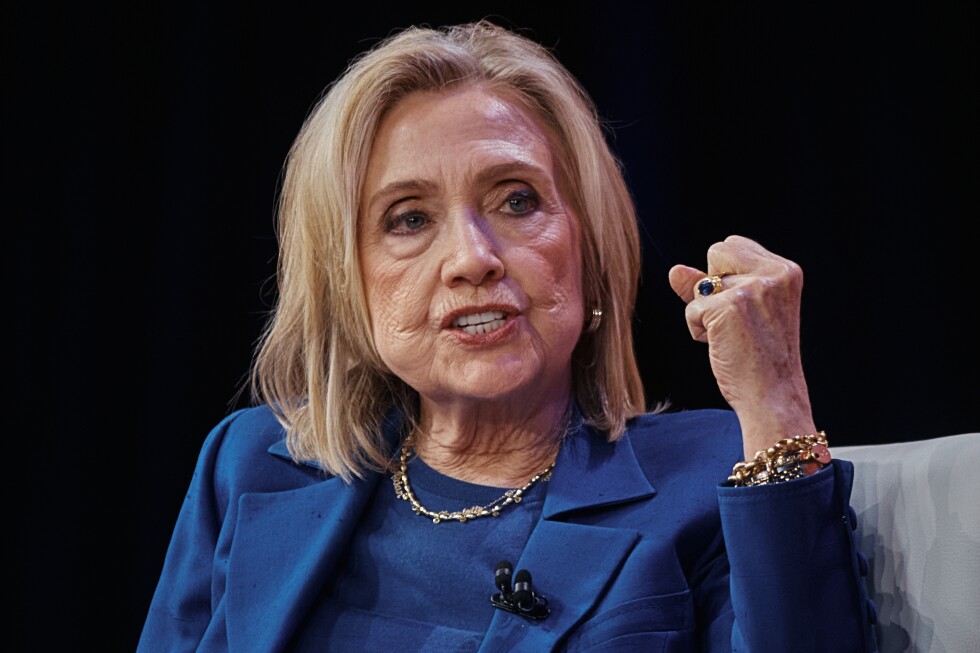
Hillary Clinton Faces House Panel: Unpacking the Closed-Door Epstein Deposition
The intricate and often sensitive investigation into Jeffrey Epstein's vast network continues to draw in prominent figures, with former Secretary of State Hillary Clinton recently providing closed-door testimony to a House Oversight panel. This highly anticipated deposition, conducted at the Clintons' Chappaqua, New York, residence, marked a significant moment in the ongoing congressional inquiry. While the proceedings unfolded away from public scrutiny, details emerging from the agreement shed light on the specific areas of focus for lawmakers and the delicate political tightrope walked by all parties involved.
The core of the House Oversight Committee's questioning of Hillary Clinton centered on critical aspects of the federal government's handling of the investigations into Jeffrey Epstein and his co-conspirator, Ghislaine Maxwell. Lawmakers were particularly keen to explore potential ethics violations by elected officials and examine how Epstein and Maxwell allegedly exploited their connections to powerful figures – including the Clintons – to evade accountability for their heinous alleged sex trafficking crimes. This meticulous focus aims to uncover any systemic failures or undue influence that might have allowed Epstein's illicit activities to continue unchecked for years.
The House Panel Clinton Deposition: What Was Discussed?
The terms of Hillary Clinton's agreement to comply with the congressional subpoena stipulated a clear agenda for the testimony. The
Hillary Clinton Faces House Panel in Epstein Investigation was specifically designed to delve into the federal government's actions concerning the Epstein and Maxwell investigations. Key areas of discussion included:
- Government Handling of Investigations: Scrutiny of how federal agencies managed the cases against Epstein and Maxwell, particularly in Florida, long after Bill Clinton had left office.
- Ethics Violations: Examination of any potential ethical breaches by elected officials connected to the Epstein saga.
- Exploitation of Connections: Inquiry into how Epstein and Maxwell might have leveraged their associations with influential individuals, such as the Clintons, to shield themselves from legal repercussions related to their alleged sex trafficking activities.
Crucially, the agreement also outlined topics that would be excluded from the questioning. Notably, the House panel agreed not to pursue issues that have historically been a fixation for Republicans, such as Hillary Clinton's handling of the 2012 Benghazi attack during her tenure as Secretary of State or her use of a private email server. This concession highlights the committee's stated commitment to maintaining focus squarely on the Epstein investigation, though it did not entirely quell accusations of political motivation.
It is important to emphasize that neither Bill nor Hillary Clinton has been accused of wrongdoing in connection with Jeffrey Epstein's crimes. Hillary Clinton has consistently maintained that she has no memory of ever meeting Epstein. Bill Clinton, while acknowledging several occasions of using Epstein's plane, has asserted that he never visited Epstein's infamous private island and had no knowledge of his criminal activities.
Behind Closed Doors: Terms and Context of the Testimony
The decision for Hillary Clinton's testimony to occur behind closed doors and away from Capitol Hill in Chappaqua, New York, was a result of a carefully negotiated agreement. Following a subpoena from the body’s Republican chair, James Comer, the Clintons reluctantly agreed to testify under the threat of contempt charges. To facilitate their cooperation, members of the House Oversight Committee traveled to Chappaqua, allowing the depositions to take place near the couple’s home. Bill Clinton was scheduled to provide his testimony under identical circumstances the following day.
This arrangement underscores the unique challenges and political dynamics inherent in investigations involving such high-profile figures. While the Clintons reportedly expressed a preference for public testimony, the closed-door format is often utilized in congressional inquiries to allow for more candid and comprehensive questioning without the immediate pressures and performative aspects of a public hearing. The expectation, however, is that written transcripts and potentially video footage from both depositions will be released in the coming days, offering the public a detailed account of the proceedings. This eventual transparency is key to understanding the scope and findings of the House panel's efforts.
Navigating Political Waters: Allegations of Partisanship
The summons of the Clintons, particularly Hillary Clinton, has not been without its political ramifications and accusations of partisan intent. Both Clintons have publicly expressed their belief that they are being unfairly singled out. They contend that these depositions serve as a distraction from scrutiny of other powerful individuals, most notably Donald Trump, who also had a documented association with Epstein before their falling out.
A sentiment echoed by unnamed sources in connection with the Clintons suggested that "Republicans are trying to distract the American people from their failures to hold this Epstein administration accountable for their coverup." This perspective posits that the focus on the Clintons is a strategic maneuver to deflect attention from different aspects of the broader Epstein scandal, particularly those involving other political figures. This critical angle of the
Clinton's Epstein Testimony: Is It a Partisan Political Play? highlights the inherent difficulty in separating legitimate investigative inquiry from partisan political maneuvering, especially in such a charged environment.
The Clintons' Stance and Past Interactions with Epstein
The public record, and statements from both Clintons, delineate their claimed relationship with Epstein. As mentioned, Hillary Clinton has maintained she does not recall ever meeting Epstein. Bill Clinton's interactions, however, are more documented. He has publicly acknowledged flying on Epstein's private plane, dubbed the "Lolita Express," on several occasions in the early 2000s. He has consistently asserted that he never visited Epstein's private island in the Caribbean, Little St. James, which became notorious for alleged illicit activities. Both Clintons have vehemently stated they had no knowledge of Epstein's heinous crimes.
This distinction is crucial, as the House panel's investigation aims to clarify not just direct involvement, but also any instances where powerful figures' connections might have been exploited, whether wittingly or unwittingly, to shield Epstein from justice. The testimonies offer a critical opportunity for the Clintons to provide their accounts directly to congressional investigators, contributing to a more complete understanding of the complex web surrounding Epstein.
What Comes Next? The Road Ahead
With the closed-door depositions concluded, the focus now shifts to the expected release of the transcripts and potentially video footage. These documents will provide the public and media with the most detailed look yet into the questions posed by the House panel and the answers provided by Hillary and Bill Clinton. The information contained within these releases could significantly impact public perception, inform further investigative steps, and potentially shed new light on the extent of Epstein's network and how he managed to operate with such impunity for so long.
The House Oversight Committee's overarching goal in this and related inquiries is to ensure accountability, identify systemic failures in the justice system, and prevent similar egregious crimes from being perpetuated. The high-profile nature of the individuals involved, combined with the horrifying details of Epstein's crimes, ensures that this investigation will remain a topic of intense public and political interest, with every detail scrutinized for its implications for justice and governance.
In conclusion, Hillary Clinton's closed-door deposition before the House panel represents a pivotal moment in the ongoing Epstein investigation. While conducted away from the public eye, the agreed-upon terms ensure a focused inquiry into the government's handling of the case, potential ethics violations, and the exploitation of powerful connections. Despite partisan critiques and the Clintons' claims of being unfairly targeted, the testimonies aim to contribute to a comprehensive understanding of how Jeffrey Epstein operated. The anticipated release of transcripts and video footage will undoubtedly offer crucial insights, bringing the public closer to understanding the full scope of this complex and deeply troubling saga and ensuring greater transparency and accountability moving forward.